Winter Freeze Protection for Water Heaters in Midland
Midland winters bring occasional hard freezes that can burst exposed water heater pipes and damage tankless un…
Learn moreTankless water heaters are wonderful until hard water gets a vote. The narrow passages inside a heat exchanger are the perfect place for calcium scale to build up, and Permian Basin water delivers minerals enthusiastically.
Descaling is the maintenance that keeps a tankless unit running like new. This guide explains what the service involves, how often it is needed here, the warning signs of scale buildup, and what happens if you skip it. If your unit is already throwing codes, our tankless water heater repair team can help.
If you are new to tankless ownership in West Texas, the key mindset shift is this: a tank forgives neglect for years, while a tankless bills you for it within months. The maintenance is not harder, it is just less optional. Once the yearly descale becomes routine, tankless ownership here is smooth sailing.
A tankless heat exchanger heats water as it flows through tight copper or stainless passages. Even a thin layer of scale insulates those passages, forcing the burner to work harder and raising the temperature of the metal itself. Efficiency drops, and the unit starts struggling to hold temperature.
In soft-water regions descaling every two years is fine. In the Permian Basin, 12 months is the realistic interval, and homes with very hard well water may need it every 6 to 9 months. The water here simply does not give you the luxury of stretching the schedule.
Some manufacturers tie warranty coverage to documented maintenance, so keeping descale receipts protects more than performance. If a heat exchanger fails within the warranty period and there is no maintenance record, a claim can get complicated. A yearly professional descale creates the paper trail automatically.

The first sign is usually fluctuating water temperature: hot, then lukewarm, then hot again during a shower. Next comes reduced hot water flow, since scale narrows the passages. Many units then throw an error code related to overheating or restricted flow.
Unusual rumbling or whistling from the unit during operation is another tell. If you are seeing any of these, descaling is overdue, and our tank vs tankless comparison explains how scale risk factors into the tankless decision.
Check the inlet filter screen when you notice flow problems. It sits where cold water enters the unit and catches debris before it reaches the heat exchanger. A clogged screen mimics scale symptoms, and cleaning it takes minutes. If flow returns to normal, you just saved yourself a descale, though the unit may still be due on schedule.
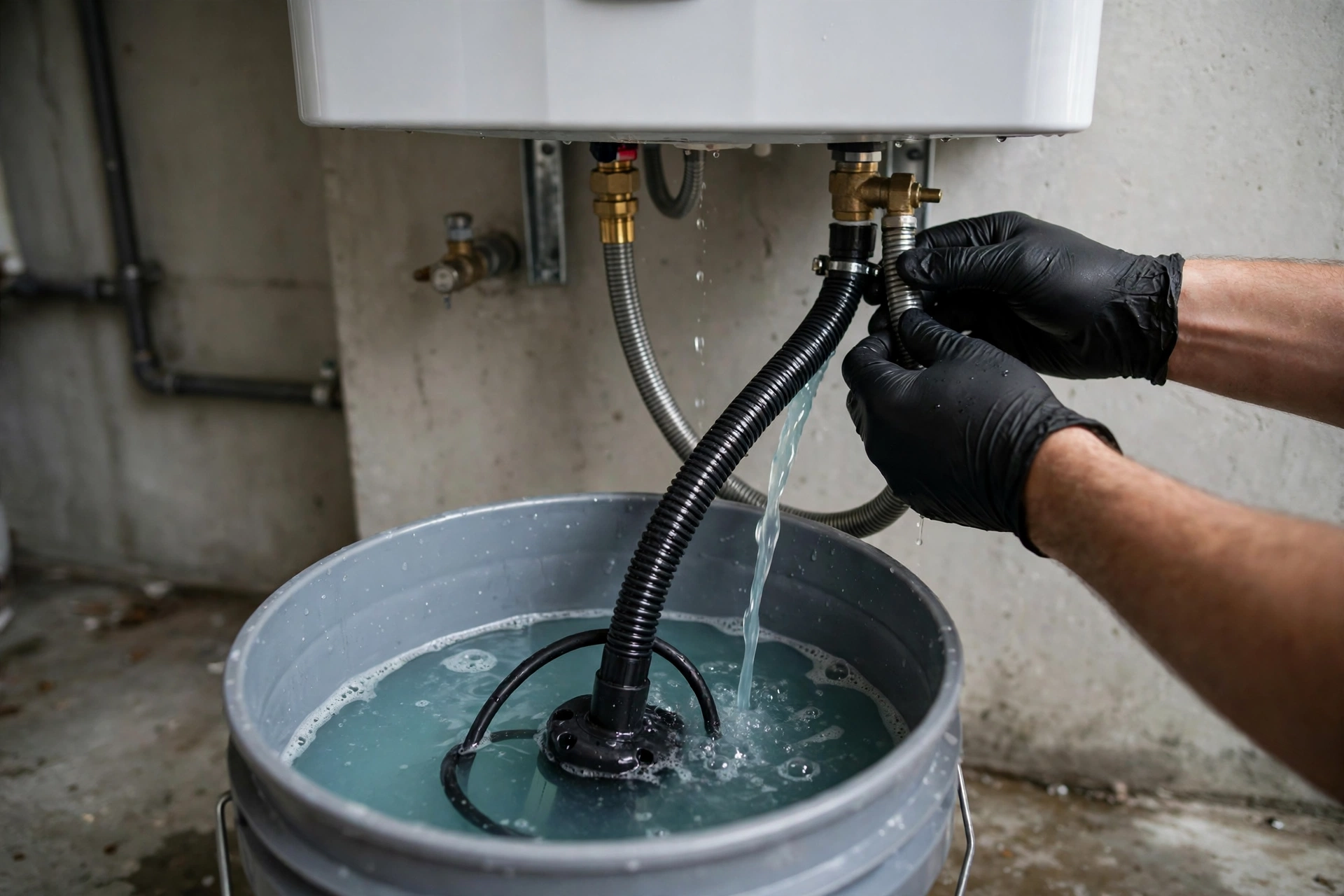
A technician isolates the unit with its service valves, connects a small pump with hoses in a loop, and circulates a descaling solution, usually food-grade vinegar or citric acid, through the heat exchanger for 45 to 90 minutes. The solution dissolves the scale and carries it out.
After the circulation, the system is flushed with clean water, the inlet filter screen is cleaned, and the unit is fired and tested. The whole visit typically takes about two hours, and the difference in performance is often immediate.
A good technician also inspects while the unit is open: the burner for soot, the venting for obstructions, the condensate drain on high-efficiency models, and the isolation valves for smooth operation. Descaling day is the ideal moment for this once-over, since the unit is already isolated and the covers are off.
Homeowners with isolation valves, a submersible pump, and comfort working around the unit can do a DIY descale with vinegar. The process is well documented and the supplies are inexpensive.
The catch is that many units were installed without service valves, which makes DIY impractical until valves are added. If your unit lacks them, a professional visit that adds valves pays for itself by making every future descale easy. Our tankless installation page notes proper valve setup on new installs.
A basic DIY descale kit needs a submersible utility pump, two washing machine hoses, a 5-gallon bucket, and a few gallons of white vinegar. Total supply cost is modest, and the same kit works year after year. The main skill involved is patience: let the pump circulate the full time rather than cutting it short.
Scale does not just reduce performance, it kills heat exchangers. Overheated, scaled passages develop hot spots that crack, and a cracked heat exchanger usually means replacing the unit. That turns a routine maintenance visit into a full replacement.
Sticking to the yearly schedule is the cheapest insurance a tankless owner in West Texas can buy. Pair it with cleaning the inlet filter and checking the venting, and a tankless unit here will hit its full 15 to 20 year lifespan.
Scale also wastes energy every day it sits in the heat exchanger. The unit burns more gas or draws more power to push the same heat through the insulating layer, which shows up on utility bills long before any error code appears. Regular descaling is one of the few maintenance tasks that pays for itself in efficiency alone.
 Want Water Heater Guidance for Your Home?
Read the guide, then describe your water heater problem and we will help arrange the next step.
Every 12 months for most Permian Basin homes. Well water or extremely hard supply may need it every 6 to 9 months.
Temperature swings, reduced hot water flow, error codes, and odd noises during operation all point to scale buildup in the heat exchanger.
Yes, food-grade white vinegar circulated with a pump is the standard DIY approach. Professionals may use citric acid solutions for heavy scale.
Scale chokes the heat exchanger, causing overheating, error shutdowns, and eventually cracks that require full unit replacement.
Midland winters bring occasional hard freezes that can burst exposed water heater pipes and damage tankless un…
Learn more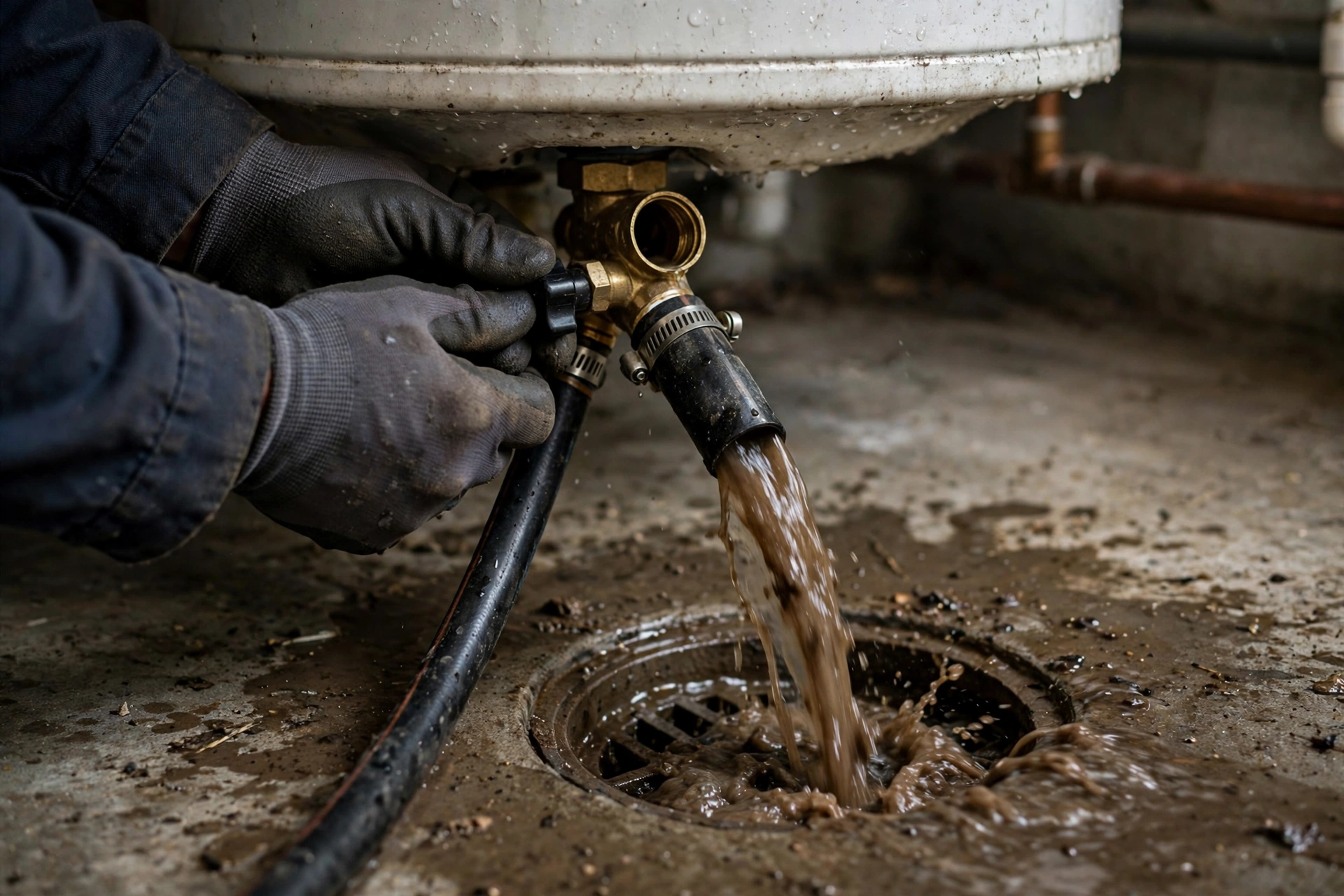
Flushing a water heater means draining the tank through the drain valve to carry out the mineral sediment that…
Learn more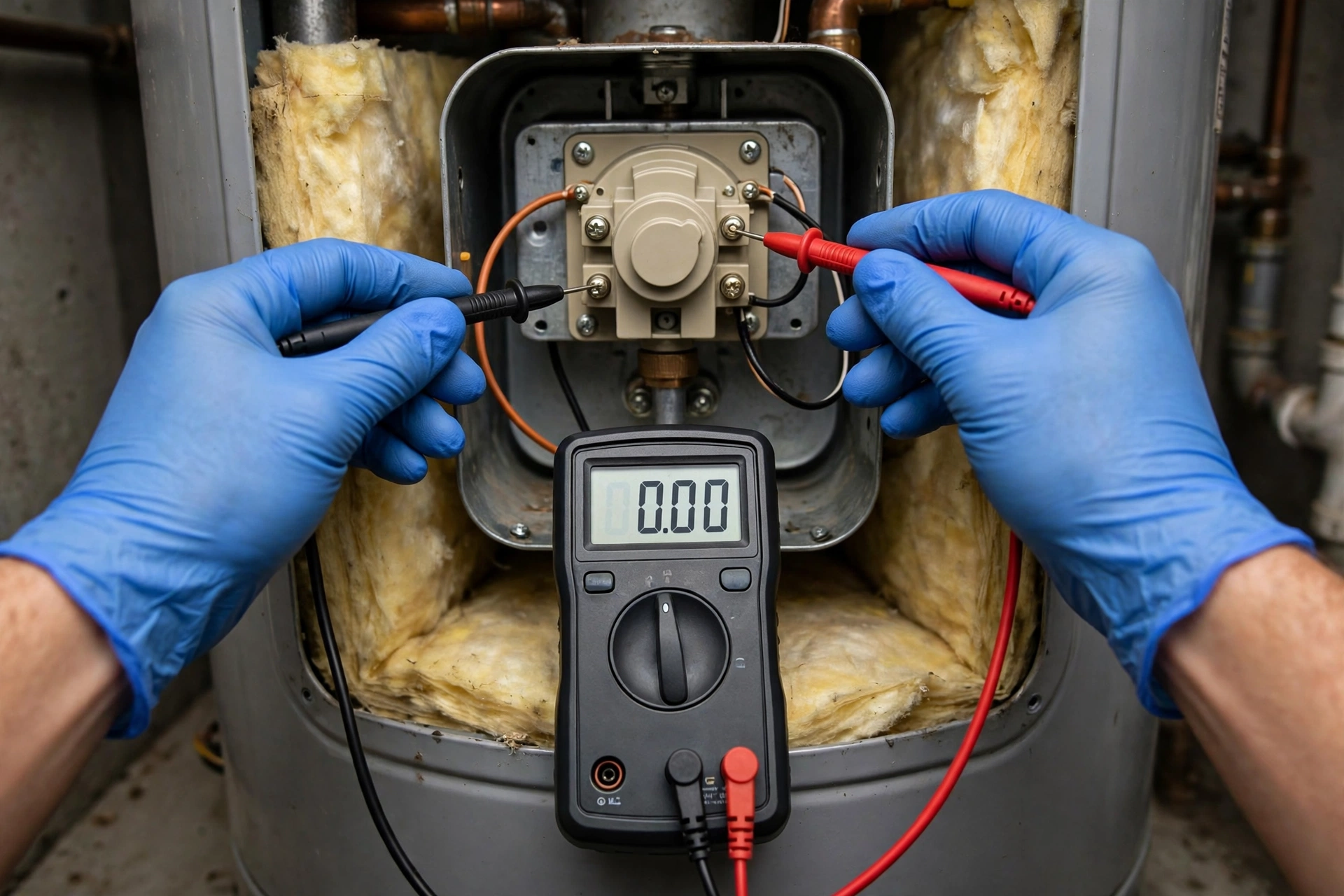
The most common reasons for no hot water are a tripped breaker, a failed heating element, a worn-out thermocou…
Learn moreHot Water, HandledDescaling a tankless water heater means circulating a mild acid solution through the heat exchanger to dissolve mineral buildup. In the Permian Basin's hard water, this service is needed every 12 months, and skipping it leads to error codes, reduced flow, and early heat exchanger failure. Our tankless water heater descaling page covers the professional service in detail.