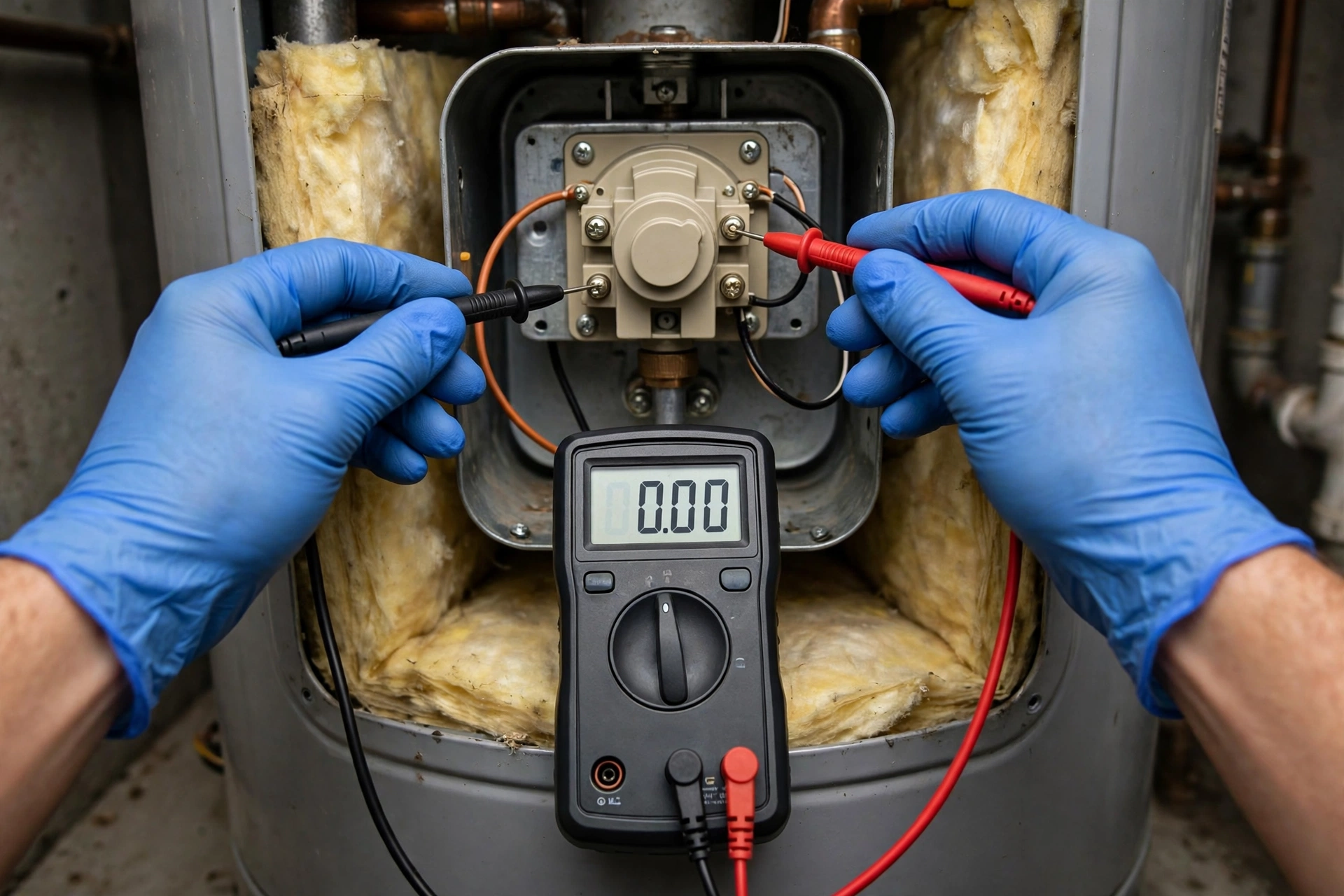
No Hot Water? Common Causes in Midland Homes
The most common reasons for no hot water are a tripped breaker, a failed heating element, a worn-out thermocou…
Learn moreEvery water heater replacement in Midland eventually faces the same question: stick with a tank or go tankless? Marketing makes tankless sound like the obvious upgrade, but West Texas water adds wrinkles the brochures skip.
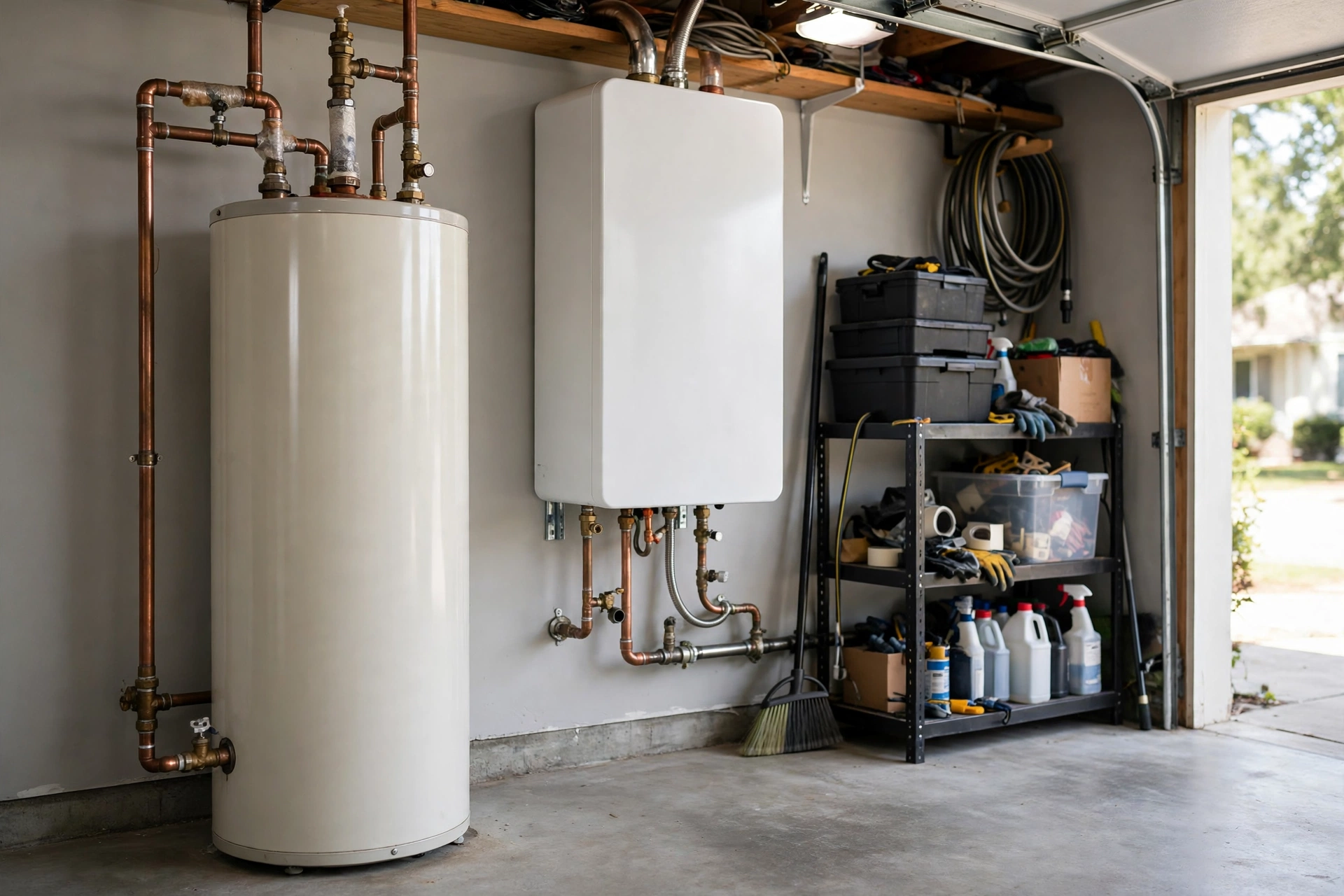
This comparison looks at both options through Midland conditions specifically: hard water, hot summers, occasional hard freezes, and typical Permian Basin household patterns. If you decide on tankless, our tankless water heater installation page walks through what the job involves.
Tank heaters collect sediment on the tank floor, which you remove with a yearly flush. It is a blunt, forgiving process, and the tank tolerates some neglect before performance falls off. The tradeoffs are real but slow.
Tankless heaters run water through a compact heat exchanger with narrow passages. Scale narrows those passages fast in hard water, and a scaled heat exchanger throws error codes and shuts down. The fix is a yearly descaling flush with a pump and vinegar solution, which our tankless descaling guide explains. Skip it and you will know.
A whole-home sediment pre-filter or water softener helps both types but changes the equation differently. On a tank it slows sediment accumulation between flushes. On a tankless it protects the narrow heat exchanger passages where scale does the most damage. Either way, treating the water is the single best upgrade a Midland homeowner can make for any water heater.
Tank units are the budget-friendly install: simpler venting, simpler plumbing, and a shorter job. Tankless units cost more to install because they often need upgraded gas lines, new venting, and sometimes electrical work.
Over time the math narrows. Tankless units last roughly twice as long and use less energy because they do not keep 50 gallons hot around the clock. Households that use a lot of hot water see the operating savings add up, while small households may never recoup the premium.
Energy savings come from eliminating standby heat loss, the energy a tank spends keeping water hot while nobody uses it. In Midland's long hot summers that standby loss is smaller than in cold climates, since the garage or closet stays warm, so the efficiency gap between tank and tankless narrows a bit here compared to northern states.
A tank delivers hot water until the tank runs out, then you wait for recovery. For a family of five with back-to-back showers, that limit matters. Tankless delivers endless hot water but at a limited flow rate, so a unit sized for one shower at a time will struggle with two showers plus laundry.
Proper sizing is everything with tankless. An undersized unit in a busy Midland household is a daily frustration. Our repair and installation team sizes tankless units to real household demand before recommending one.
Households that hate waiting for hot water at distant bathrooms can add a recirculation pump to either system. On a tankless unit it must be a model designed for recirculation, or an add-on kit, since constant flow through the heat exchanger changes how the unit cycles. Ask about this during sizing if long pipe runs are part of your daily annoyance.
Midland winters are mostly mild, but the region gets hard freezes that burst pipes. Outdoor or garage-mounted tankless units are more freeze-sensitive than a tank sitting in a conditioned closet, though most units have built-in freeze protection that needs power to work.
A power outage during a freeze is the danger scenario for any water heater, but tankless owners should know where their unit is and how exposed it is. See our winter freeze protection guide for the full checklist.
If extended outages worry you, a small portable generator sized for the tankless controls keeps freeze protection alive through a blackout. The unit draws little power for its electronics and protection cycles, so even a modest generator covers it. That backup plan turns the biggest tankless freeze weakness into a non-issue.
Choose a tank if your budget is tight, your household is small to medium, and you want the simplest maintenance. Choose tankless if you want endless hot water, have the space constraints of a small utility closet, and will commit to yearly descaling.
Either way, the install quality matters more than the brand. Proper venting, correct gas sizing, and a pressure check decide whether the unit runs well for its full lifespan. Our water heater installation page covers what a proper job includes.
Think about resale too. In Midland's competitive housing market, a new tankless unit reads as an upgrade to buyers, while a new efficient tank reads as responsible maintenance. Neither is a bad look, but if you plan to sell within a few years, the simpler tank replacement usually returns its value more reliably.
Finally, be honest about your maintenance habits. If you know you will never schedule a yearly descale, a tank with a yearly flush reminder is the more forgiving choice. The best water heater is the one whose maintenance you will actually do, not the one with the best brochure.
 Want Water Heater Guidance for Your Home?
Read the guide, then describe your water heater problem and we will help arrange the next step.
It can be, if you commit to yearly descaling. The hard water does not disqualify tankless, but it does make the maintenance non-optional.
No. Tankless units need electricity for the controls and ignition even on gas models, so an outage means no hot water until power returns.
Typically 15 to 20 years with yearly descaling. Without it, hard water can cut that sharply by scaling the heat exchanger.
Often yes, but it may need upgraded gas supply and new venting. A site check confirms what the swap requires before you commit.
The most common reasons for no hot water are a tripped breaker, a failed heating element, a worn-out thermocou…
Learn more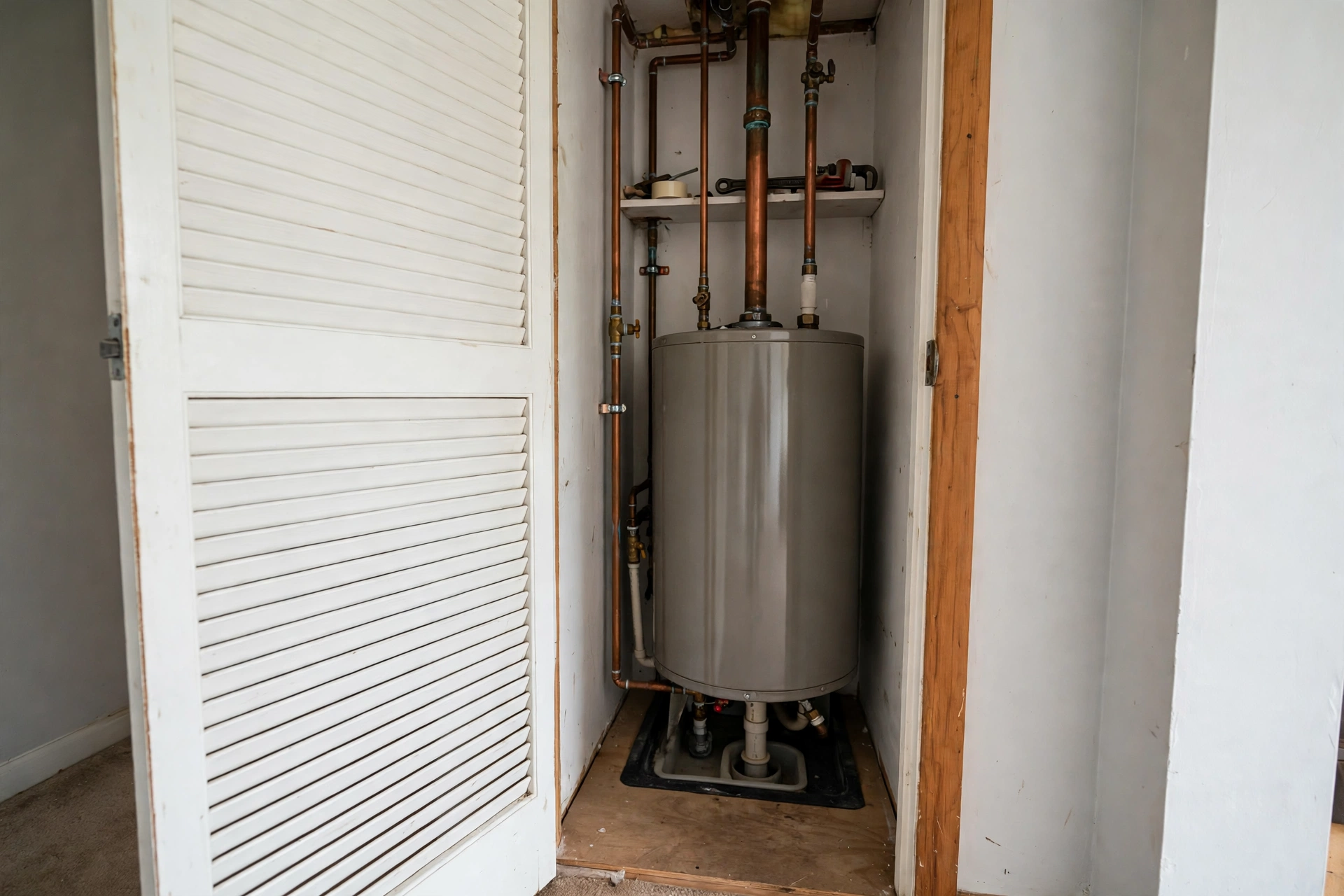
Many older Midland homes have water heater closets built for smaller, shorter units than what is sold today, w…
Learn more
A standard tank water heater in Midland typically lasts 8 to 12 years, while a tankless unit can run 15 to 20 …
Learn moreHot Water, HandledTank water heaters cost less up front and handle Midland hard water with simple yearly flushing. Tankless units last longer and save space but need yearly descaling because West Texas mineral content scales their heat exchangers fast. The right pick depends on your household size, your water, and whether you want endless hot water on demand.